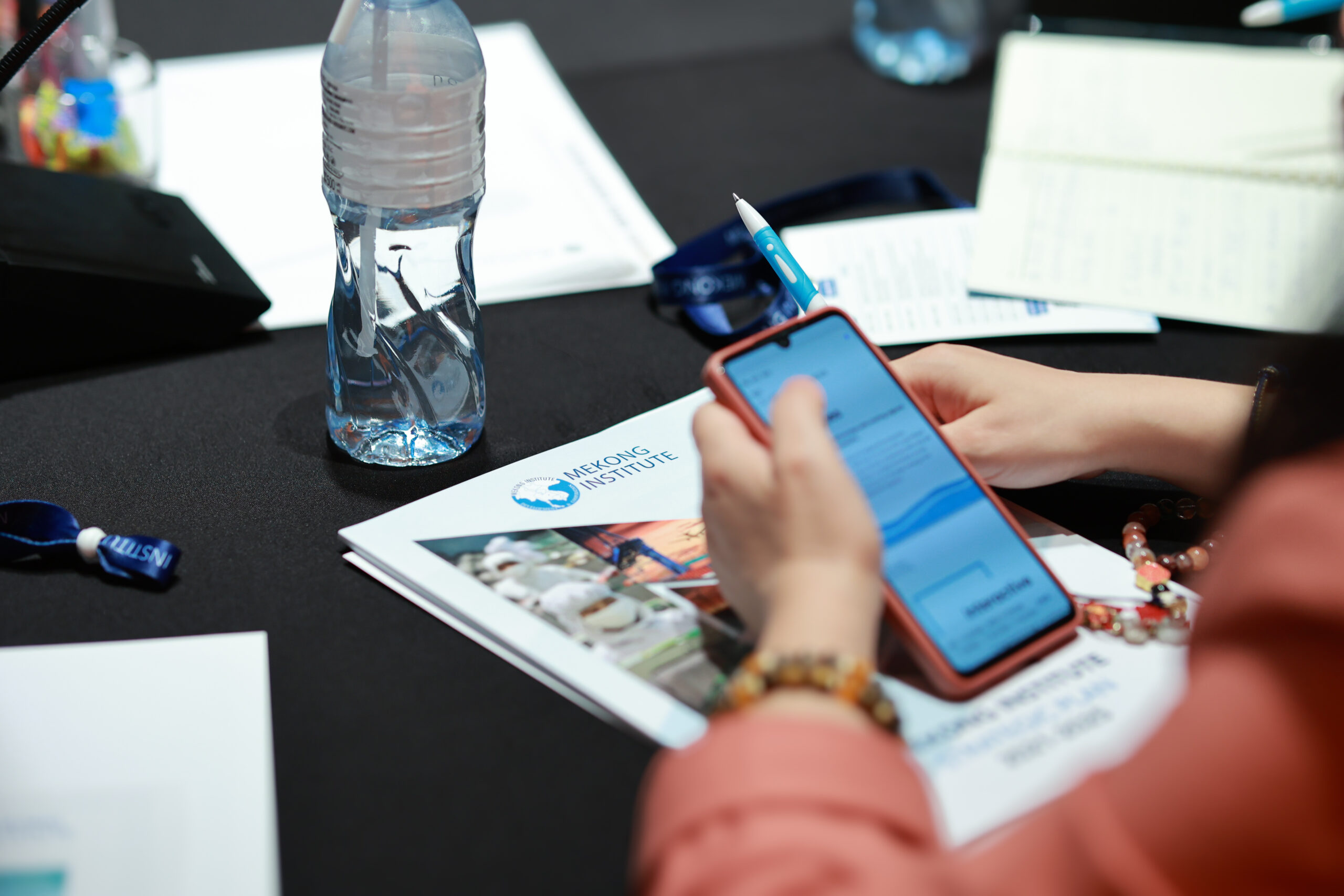

Dubbed the forum of the Greater Mekong Subregion (GMS), the Mekong Institute’s (MI) annual Mekong Forum is continuously evolving from a venue for dialogue into a platform for joint action. At its 11th edition, held in Phnom Penh from July 30 to 31, 2025, the Mekong Forum transformed individual experiences and insights into collaborative outputs, as regional stakeholders co-created ideas to advance green, inclusive, and resilient development through the bio-circular, care, and creative economies.
“The Mekong Forum belongs to the GMS — every participant is a co-creator,” said MI Executive Director Mr. Suriyan Vichitlekarn. To ensure an inclusive and resilient region, he said governments must ensure economic opportunities reach every part of the GMS. “Capillary economies such as the bio-circular, care, and creative economies can deliver benefits to micro, small, and medium enterprises (MSMEs), rural communities, and the people of the GMS.”
In pursuit of this vision, MI and its partners designed the Mekong Forum to host three breakout sessions as co-creation workshops. The sessions began with thought-provoking lightning talks from about 25 experts, setting the stage for small-group discussions where participants exchanged insights, challenged assumptions, and shaped project ideas. Participants tackled gaps and opportunities surrounding the three economies before presenting their proposals to the plenary.
One group explored how to scale green supply chains by helping agri-food enterprises integrate sustainable practices and meet emerging Environment, Social, Governance (ESG) standards. Their idea combined assessments, targeted training, and tailored technical support to boost competitiveness while opening access to sustainable markets. Another group addressed the challenge of unsustainable shrimp farming, proposing a circular aquaculture model powered by solar energy and natural wetland purification systems. Discussions on agriculture also yielded the idea of circular rice hubs that transform rice straw into biofertilizers, packaging, and other value-added products — a move to reduce air pollution, diversify incomes, and create rural jobs.
The care economy breakout focused on elevating the sector’s visibility, quality, and reach. Participants proposed a regional mental health ecosystem built on shared data, dialogue, and digital tools to enable early intervention and reduce stigma. They also envisioned a professionalized elderly care system linking caregivers with jobs, improving service standards, and changing cultural perceptions around aging. To unify the sector, the group put forward a regional certification framework that would standardize skills, boost labor mobility, and ensure care workers are recognized as essential contributors to the economy.
In the creative economy session, participants discussed how to bridge gaps between artists, markets, and policymakers. They proposed an annual GMS Creative Festival rotating among member countries to connect creators with buyers, foster collaborations, and boost local economies. Complementing this was a regional cultural entrepreneurship program to train and equip local trainers with business, digital, and storytelling tools, enabling them to support artisans and creative MSMEs. Another idea centered on the ancient city of Siem Reap, envisioning a local creative economy strategy co-developed with authorities to expand tourism offerings, generate jobs, and stem youth outmigration.
In a conversation between Mr. Suriyan and Dr. Eng Netra, Executive Director of the Cambodia Development Resource Institute (CDRI), they highlighted the need to move beyond traditional measures of growth and focus on quality of development rather than quantity.
“As we talk a lot about the economy, we tend to focus on GDP growth rate, which is an important mark of ambition. But what’s becoming more and more critical is inclusiveness, resilience, and putting quality of development as the number one priority,” Dr. Netra said, underscoring the value of human resource development at the regional level and of initiatives that are economically viable as well as socially and ecologically sustainable.
As Mr. Suriyan also reflected, “Inclusive means not just engaging people in the meeting but co-designing how implementation on the ground should look.”
As this year’s host, the Kingdom of Cambodia expressed pride in the Mekong Forum as “a platform that continues to unite the region’s most forward-thinking leaders, change-makers, and innovators under one roof.”
Representing the host country, H.E. Mr. Bin Troachhey, Minister of Planning, noted that the region’s future is shaped by climate dynamics, technological disruption, and demographic shifts—demanding a development vision that is resilient, inclusive, and future-ready. He stressed that investing in people, protecting natural resources, and fostering innovation are “not optional—they are indispensable,” a belief shared across the Mekong.
“We must turn dialogue into delivery,” he urged. “The insights and recommendations generated here must not remain abstract; they must guide national policies, cross-border collaboration, and regional investments. We are committed to integrating these outcomes into our national and regional frameworks, and we call on all countries present to align their priorities with our shared aspirations.”
The Mekong Forum breakout and co-creation sessions were supported by a diverse group of regional and international partners, including the Cambodia Ministry of Planning, New Zealand Ministry of Foreign Affairs and Trade (MFAT), Cambodia Development Resource Institute (CDRI), World Wide Fund for Nature (WWF), International Rice Research Institute (IRRI), Deutsche Gesellschaft für Internationale Zusammenarbeit (GIZ) GmbH, Yunnan Normal University, Regional Public Health Laboratory (RPHL) Network, International Labour Organization (ILO), Khon Kaen University (KKU), Wake Up Team, Cambodia Ministry of Culture and Fine Arts, and the Creative Industries of Cambodia Association for Development and Advocacy (CICADA).


