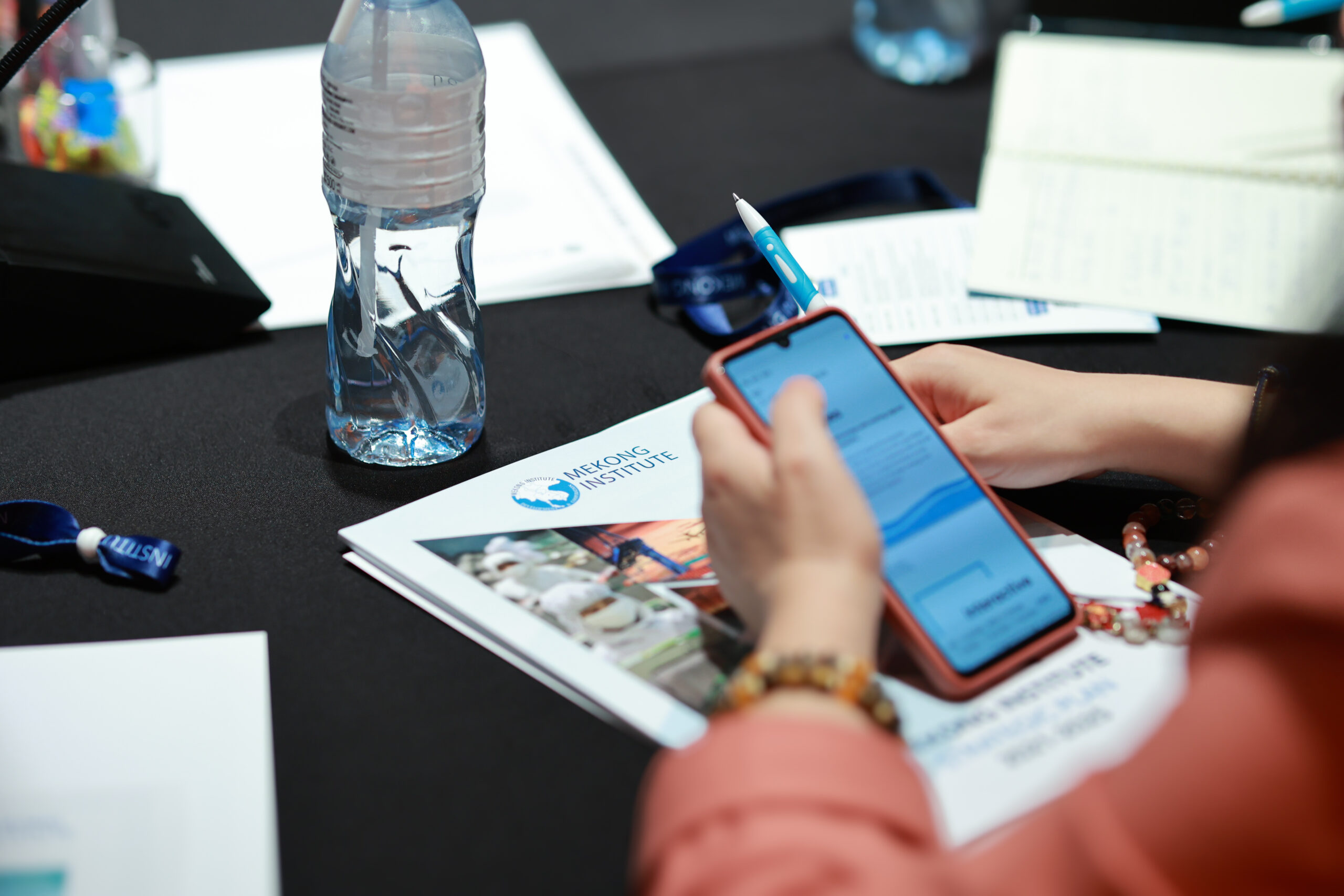

With over 40 participating organizations and projects from across the Greater Mekong Subregion (GMS), the Mekong Forum 2025 exhibit from July 30 to 31 transformed Shangri-La Phnom Penh’s Ballroom into a marketplace of ideas and forward-looking innovations. The two-day exhibit was an integral part of the annual regional forum and sought to showcase how communities across the GMS are shaping more inclusive, sustainable futures.
The Mekong Institute (MI) carefully curated this year’s Mekong Forum exhibit—dubbed the C3 Corridor—to feature thematic zones that collectively represent a new, resilient foundation for future growth through the interconnection of “healthy environments, thriving people, and inspired minds.” C3 stands for Circular, Care, and Creative—three interdependent economic forces expected to drive the region’s development in the coming years.
“Think of the C3 Corridor as a small village—a living story of innovation, resilience, and collaboration. The three exhibit zones are not separate paths but interconnected lanes in our Corridor. As in any vibrant community, each part strengthens the whole,” said Mr. Suriyan Vichitlekarn, MI Executive Director, as he described the concept behind the exhibition.
One of the zones—called the Circular Cove—revolved around bio-circular-green projects and initiatives that convert waste into value and champion resource efficiency. From rice straw waste reuse and sustainable rice packaging to resilient food systems, solutions demonstrated how circular approaches are reshaping the future of agrifood production. Aside from Cambodia-based organizations, exhibitors included embassies and development partners from New Zealand, the United Kingdom, and Australia, promoting circular practices in agriculture, food safety, and trade. Start-ups, small enterprises, and project teams from Vientiane, Yangon, and Hanoi flew all the way to Phnom Penh to present how their products and services are contributing to efforts for inclusive regional development.
The Care Clinic zone explored how care systems—physical, mental, and social—are at the heart of human development and regional stability. The zone featured trends in healthcare and wellness, responding to challenges brought by aging populations and uneven access to services. With the Royal Phnom Penh Hospital leading the list of exhibitors in this zone, showcases included regional initiatives on public health systems strengthening, pediatric heart care, and occupational health. In addition to medical and reproductive health services, community-based psychosocial support and elderly care emerged among the growing needs of the region.
The final stop—curated with coordination support from the Creative Industries of Cambodia Association for Development and Advocacy (CICADA) and Cambodia’s Ministry of Culture and Fine Arts—was called Creative Café and celebrated the creative economy. The zone offered visitors a chance to experience how artistic and cultural expression shapes livelihoods, strengthens identity, and fuels economic vitality. From cultural tourism, culinary arts, traditional crafts, and music, to literature, modern performing and visual arts, film, and digital content, the zone highlighted creativity as both a cultural asset and a commercial force.
Complementing these three zones were Collab Corners, where development and policy institutions—such as MI, the People’s Republic of China, the Mekong–Republic of Korea Cooperation Fund (MKCF), and the Cambodia Development Resource Institute (CDRI)—provided insights into regional cooperation and innovation frameworks that support these emerging economies.
The C3 Corridor was officially opened by H.E. Dr. Sok Siphana, Senior Minister in Charge of Special Missions and Chairman of Cambodia’s Trade Policy Advisory Board. In remarks delivered at the forum’s opening plenary on behalf of H.E. Mr. Prak Sokhonn, Deputy Prime Minister and Minister of Foreign Affairs and International Cooperation of Cambodia, H.E. Dr. Sok Siphana emphasized the urgency of shifting away from outdated growth models.
“Traditional growth models—based on natural resource extraction, low-cost labor, and export-driven industries—are no longer adequate,” said H.E. Dr. Sok Siphana. “We must now explore new economic models that prioritize innovation and sustainability to address today’s global and regional challenges. The concept of new economies offers a forward-looking response—encompassing digital transformation, green innovation, and investment in human capital. This is the kind of growth we need—one that integrates technology and human development to meet the demands of the future of work.”
Following the ceremonial opening of the exhibit, Mr. Suriyan led a guided walkthrough of the C3 Corridor. “Together, these rising economic forces are paving the way toward healthy environments where nature and resources are respected; thriving people whose well-being and dignity are prioritized; and inspired minds where innovation and imagination drive progress,” said Mr. Suriyan.
Aside from the showcases and networking, the Mekong Forum’s C3 Corridor also hosted innovation pitches from select exhibitors and partners such as the Asian Disaster Preparedness Center (ADPC) and the Global Green Growth Institute (GGGI). At the forum’s closing plenary, two exhibitors—iDE and Action4Diabetes—emerged as participants’ favorites and were recognized for their engaging showcases. Three exhibit-goers also won prizes from a lucky draw. ###
Mekong Forum 2025 C3 Corridor Exhibitors
Circular Cove
1. New Zealand Ministry of Foreign Affairs and Trade (MFAT)
2. United Kingdom – Foreign Commonwealth and Development Office (FCDO)
3. Australian Department of Foreign Affairs and Trade (DFAT) / Cambodia-Australia Partnership for Resilient Economic Development (CAPRED)
4. Chalatex
5. Global Food Safety Institute (Yangon)
6. GreenGoods (Vientiane)
7. iDE
8. International Rice Research Institute (Hanoi) / RiceEco Project
9. Live & Learn Environmental Education, Inc.
10. Mekong Institute – Agricultural Development and Commercialization Department / Mekong CREATES / Mekong CONNECT
11. Save The Children
Care Clinic
12. Royal Phnom Penh Hospital
13. Mekong Children’s Heart Care Project
14. Regional Public Health Laboratory (RPHL) Network
15. Action 4 Diabetes
16. Health Action Coordinating Committee (HACC)
17. International Labour Organization (ILO)
18. Living Well Cambodia
19. Reproductive Health Association of Cambodia (RHAC)
Creative Cafe
20. Cambodia Ministry of Culture and Fine Arts
21. Nowhere Art Studio
22. Tiger Media / Dadana
Creative Industries of Cambodia Association for Development and Advocacy (CICADA)
23. Aknusar Tambanh Chek Khmer
24. All Dreams Cambodia
25. Amusement Park
26. Avatar (Golden Voice)
27. Chef Nak
28. CHHUON Sotheavy
29. Cultural Experiences Cambodia
30. KEM Chanbopha
31. KME A Few Acres of Snow
32. Kongchak Pictures
33. Kramoun
34. Phare Creatives Studio
35. Princess Buppha Devi Dance School
36. Silver Belle
37. Sunflower Film
38. Suon Sonisa
Collab Corners
39. Mekong Institute (MI)
40. People’s Republic of China
41. Mekong-Republic of Korea Cooperation Fund (MKCF)
42. Cambodia Development Resource Institute (CDRI)


