
Localized Training Equips Thailand’s Bung Khla Communities with Smart Water Solutions
As part of Thailand’s national pilot under the “Triangular Cooperation Project on Sustainable Development in the Lower Mekong River Basin based on the Water-Energy-Food Nexus for 2021–2025” (RoK–UNOSSC Facility Phase 3), also known as the “P-LINK” project, Bung Khla District in Bueng Kan Province has been chosen as a pilot site to modernize rural water management. From May 13 to 15, 2025, local officials, water operators, and technicians from Moo 1, 2, and 3 participated in a comprehensive training to improve water quality and reduce leakages using smart and sustainable technologies.
Bung Khla has faced ongoing challenges with water treatment infrastructure that relies on manual operations, faces treatment capacity constraints, encounters water loss issues, and works with basic monitoring capabilities. Until now, leak identification has primarily depended on resident reports, while billing was handled through paper-based processes. Though consistent, these practices created inefficiencies, delayed repairs, and left data gaps that hindered system-wide improvements.
To address these issues, WI.Plat, a digital water solutions company, recently deployed a range of smart technologies on the pilot sites. These include AI-powered leak detection devices, sensor-integrated monitoring systems, and solar-powered smart meters, which are now connected to a centralized digital platform. Together, these upgrades aim to enhance early detection, reduce water loss, improve billing services, and enable more responsive and reliable water management.
This week’s training marked a key step in rolling out these advanced technologies and is part of a broader knowledge-transfer initiative to introduce advanced water-energy-food (WEF) nexus technologies from the Republic of Korea (ROK) to Thailand. The initiative is supported by ROK’s Ministry of Science and ICT (MSIT), implemented by the Science and Technology Policy Institute (STEPI), and coordinated by the UN Office for South-South Cooperation (UNOSSC). In Thailand, it is delivered in collaboration with WI.Plat, the Mekong Institute (MI), the Office of the National Water Resources (ONWR) of Thailand, and the Mekong River Commission Secretariat (MRCS).
The training program was carefully tailored to match local capacities and ensure maximum effectiveness. It featured three key components: (1) technical briefings on how the new systems work and how they benefit local operations; (2) non-technical sessions highlighting the role of science, technology, and innovation (STI) in community development, making complex concepts accessible and applicable to the local context; and (3) field-based, hands-on training at local water stations, using a practical “learn-by-doing” approach that built confidence and competence through real-world application.
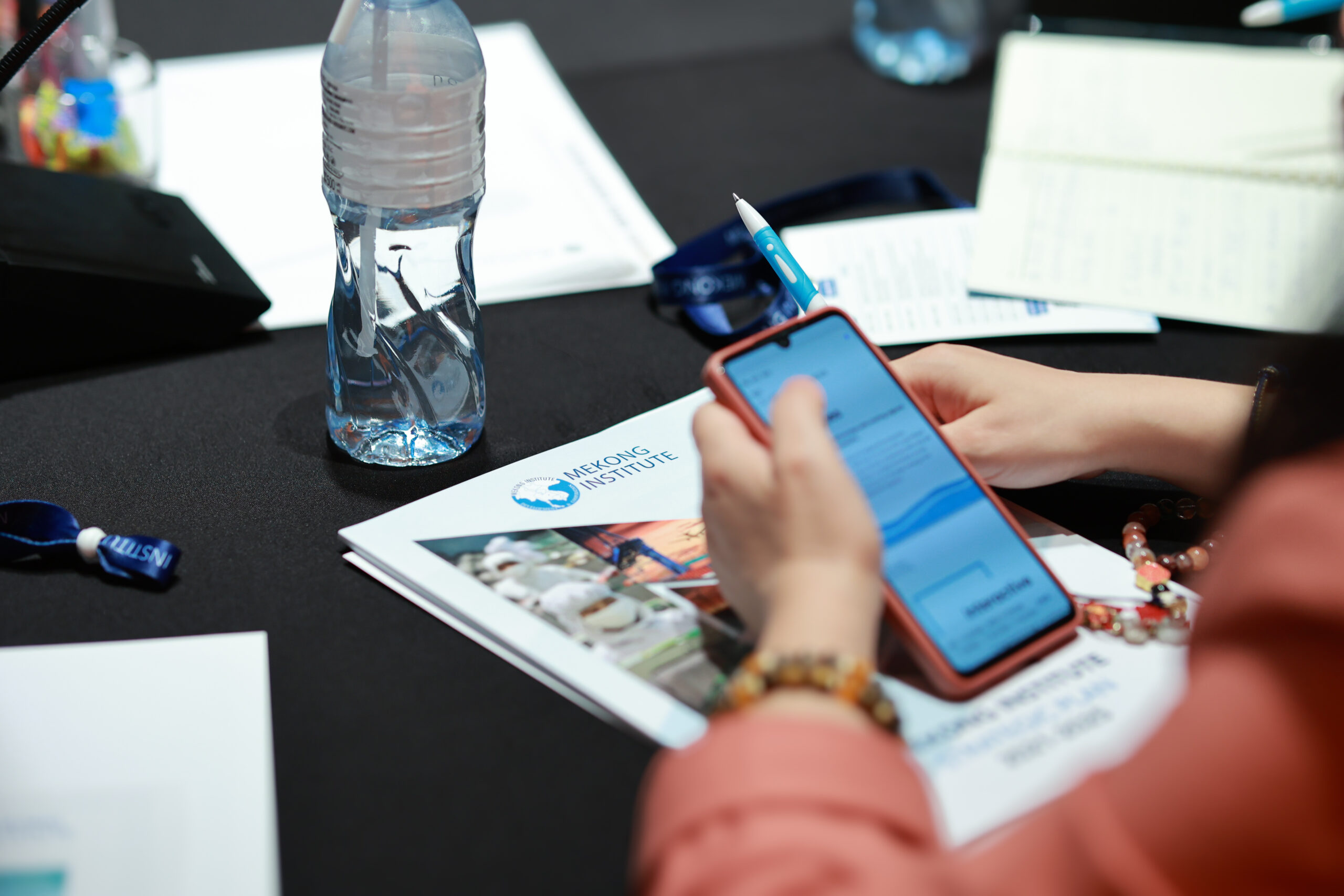
Participants learned to operate smart tools that monitor water flow, pressure, and quality in real time. They also gained experience with a newly introduced digital platform that uses AI to detect leaks and provide data for faster decision-making. Local billing staff and meter readers were trained in mobile-based systems and data analytics tools to streamline billing, improve accuracy, and enhance service transparency.
On-site exercises included installing chemical dosing equipment, testing water quality, and practicing troubleshooting techniques, giving participants the confidence to manage and maintain the new systems independently.
Mr. Naris Ardharn, Chief Executive of the Bung Khla Subdistrict Administrative Organization, emphasized the initiative’s strategic value: “I believe the success of this initiative can serve as a center of excellence, demonstrating how advanced technologies can be adapted and scaled in similar communities across Thailand and even neighboring countries. To ensure long-term impact, Bung Khla SAO is committed to working closely with local stakeholders to monitor water quality and strictly follow operation and maintenance protocols.”
This project also reflects real progress toward the Sustainable Development Goals (SDGs). By improving water quality (SDG 6), boosting local employment and services (SDG 8), using innovative AI tools (SDG 9), reducing waste and energy use (SDG 13), and promoting global cooperation (SDG 17), Bung Khla is showing how local actions can drive sustainable change.


