

Luang Prabang, Lao PDR, May 20, 2026 – The Mekong-Republic of Korea (RoK) Cooperation is backing another waste-to-value initiative that seeks to address increasing environmental and health risks due to PM2.5 pollution. The AGRI-CLEAN project, under Call 9 of the Mekong-RoK Cooperation Fund (MKCF), will be spearheaded by a consortium of Mekong universities, with Lao PDR’s Souphanouvong University (SU) as the lead implementer.
At the project launch, SU Vice-Rector Assoc. Prof. Dr. Vongpasith Chanthakhoun stressed the importance of adopting a regional approach to addressing environmental challenges such as transboundary air pollution. The project seeks a measurable decrease in PM2.5 levels in pilot areas in Cambodia, Lao PDR, Myanmar, Thailand, and Viet Nam through alternative farm waste management techniques that also create new economic opportunities for target communities.
Speaking on behalf of Lao PDR’s Ministry of Foreign Affairs, Ms. Noy Amphone extended her appreciation to RoK’s Ministry of Foreign Affairs, the Mekong Institute (MI), and the MKCF for their contributions to regional cooperation through the new project.
PM2.5 is a microscopic mixture of solid particles and liquid droplets in the air caused by a variety of factors, notably agricultural burning. AGRI-CLEAN aims to promote compost and biochar as alternatives to burning and support the production of value-added products from farm wastes.
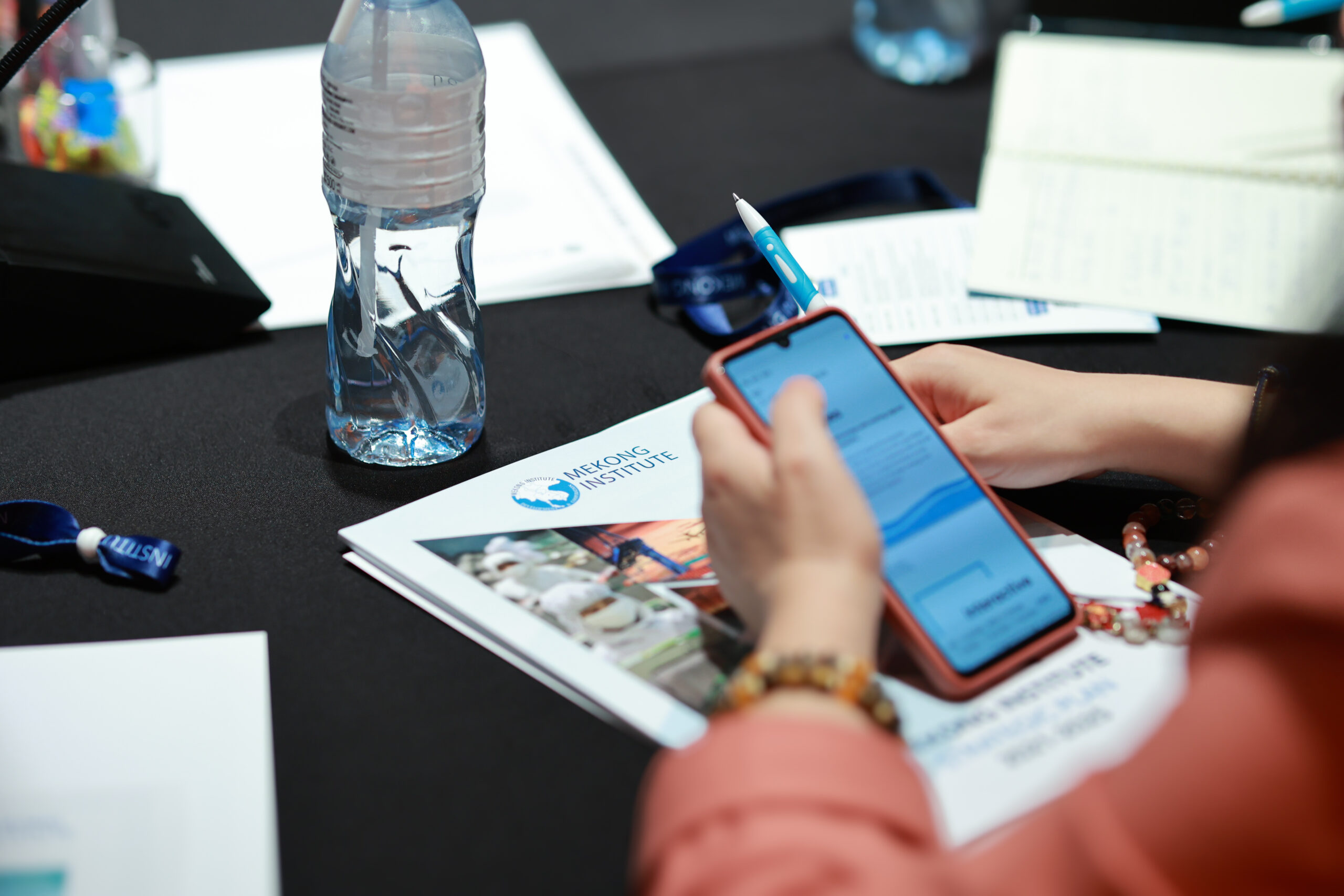
A Project Advisory Committee (PAC) meeting that followed the launch emphasized the importance of collecting baseline air quality data from each pilot site to effectively measure the progress and success of the initiative. Waste generation data was also recommended, alongside strong collaboration among relevant ministries and authorities. The committee further encouraged engaging students in field assessments and data collection. Partner universities include the University of Heng Samrin Tbong Khmum (UHSTK) in Cambodia, Khon Kaen University (KKU) in Thailand, and Gia Dinh University (GDU) in Viet Nam.
Congratulating the stakeholders, Mr. Madhurjya Kumar Dutta, Director of MKCF at MI, underscored the need to develop practical products and sustainable business models for farm waste-to-product systems that can generate tangible benefits and genuinely support farmers.


