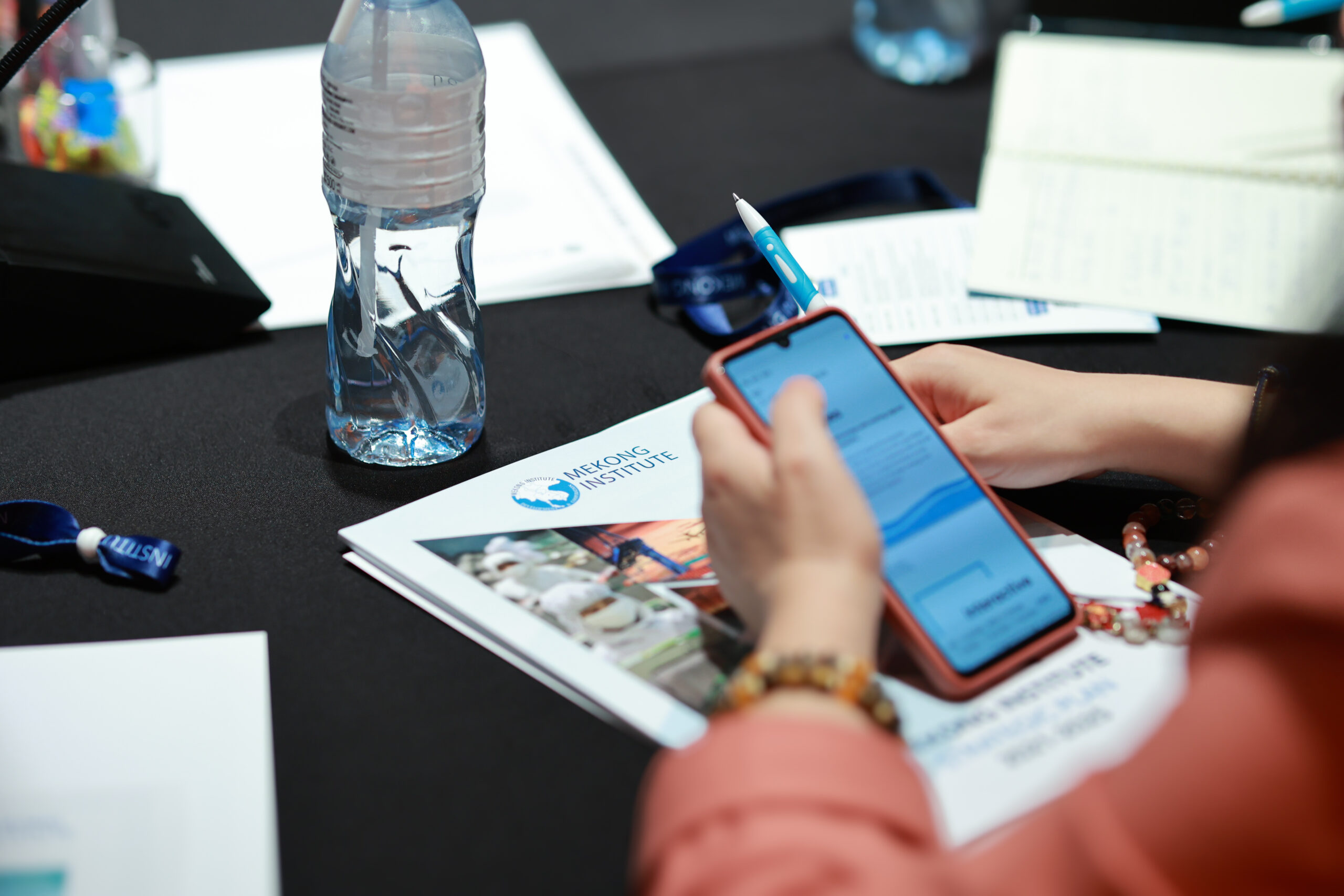

Ho Chi Minh City, Viet Nam, July 18, 2025 –– The Mekong Institute (MI) reaffirmed its commitment to advancing integrated resource management during the Workshop on “Managing the Water-Food-Energy Nexus for Sustainable Development in the Greater Mekong Subregion” and the 3rd P-LINK Regional Consultative Forum, held from July 16–18, 2025, at the Central Palace Hotel in Ho Chi Minh City.
Co-hosted by the Asian Development Bank (ADB)-funded Greater Mekong Subregion Sustainable Agriculture and Food Security Program (TA 9916 SAFSP) and the ROK-UNOSSC Facility (Phase 3) under the People’s Livelihoods Initiative through the Water-Energy-Food Nexus in the Mekong Region (P-LINK), the workshop served as a pivotal platform for knowledge exchange and multi-sectoral collaboration to tackle the region’s complex and interlinked development challenges.
With increasing climate variability, urbanization, and industrial pressures, the GMS faces intensifying demands on water, food, and energy systems. Fragmented sectoral planning—particularly in hydropower, agriculture, and land use—has led to inefficiencies, ecosystem degradation, and heightened resource insecurity. The workshop highlighted the pressing need for coordinated, cross-sectoral governance and integrated planning to avoid unintended trade-offs and maximize sustainable outcomes.
Introduced over a decade ago, the Water-Food-Energy (WFE) Nexus provides a systems-based framework to manage the interdependencies of these critical sectors. In 2019, the GMS Working Group on Agriculture formally prioritized “Adapting agriculture to climate change in the context of the WFE Nexus,” underscoring regional consensus on the value of this integrated approach. The recent workshop further operationalized this commitment by showcasing real-world applications, investment models, and pilot experiences from across the region, while fostering peer learning and cross-project synergies.
As a key implementing partner of the P-LINK initiative, MI continues to serve a facilitative role in supporting the practical application of the Nexus approach in Cambodia, Lao PDR, Thailand, and Viet Nam. In collaboration with the Mekong River Commission (MRC) and the Science and Technology Policy Institute (STEPI) of the Republic of Korea, MI has convened multi-stakeholder dialogues, coordinated pilot activities, and fostered South-South knowledge exchanges tailored to the needs of vulnerable communities.
During a high-level panel discussion on the role of development partners, Mr. Suriyan Vichitlekarn, Executive Director of MI, underscored three key messages: the need for sustained facilitative support to drive Nexus-based cooperation, the importance of broadening Nexus applications beyond traditional water, energy, and food sectors to include areas such as public health, climate resilience, and urban-rural development, and the imperative of leveling the playing field for all sectors involved to ensure genuine buy-in, shared ownership, and long-term commitment.
Reflecting this vision, MI has embedded the Nexus approach as a strategic priority in its upcoming Strategic Plan 2026–2030. Through initiatives such as P-LINK, MI aims to foster inclusive policy dialogues, promote cross-sectoral integration, and build capacity for more equitable and resilient development pathways in the GMS.
The workshop concluded with renewed momentum among regional partners to align investments, policies, and practices under the Nexus framework—paving the way for more integrated, inclusive, and impactful development across the Mekong region.


