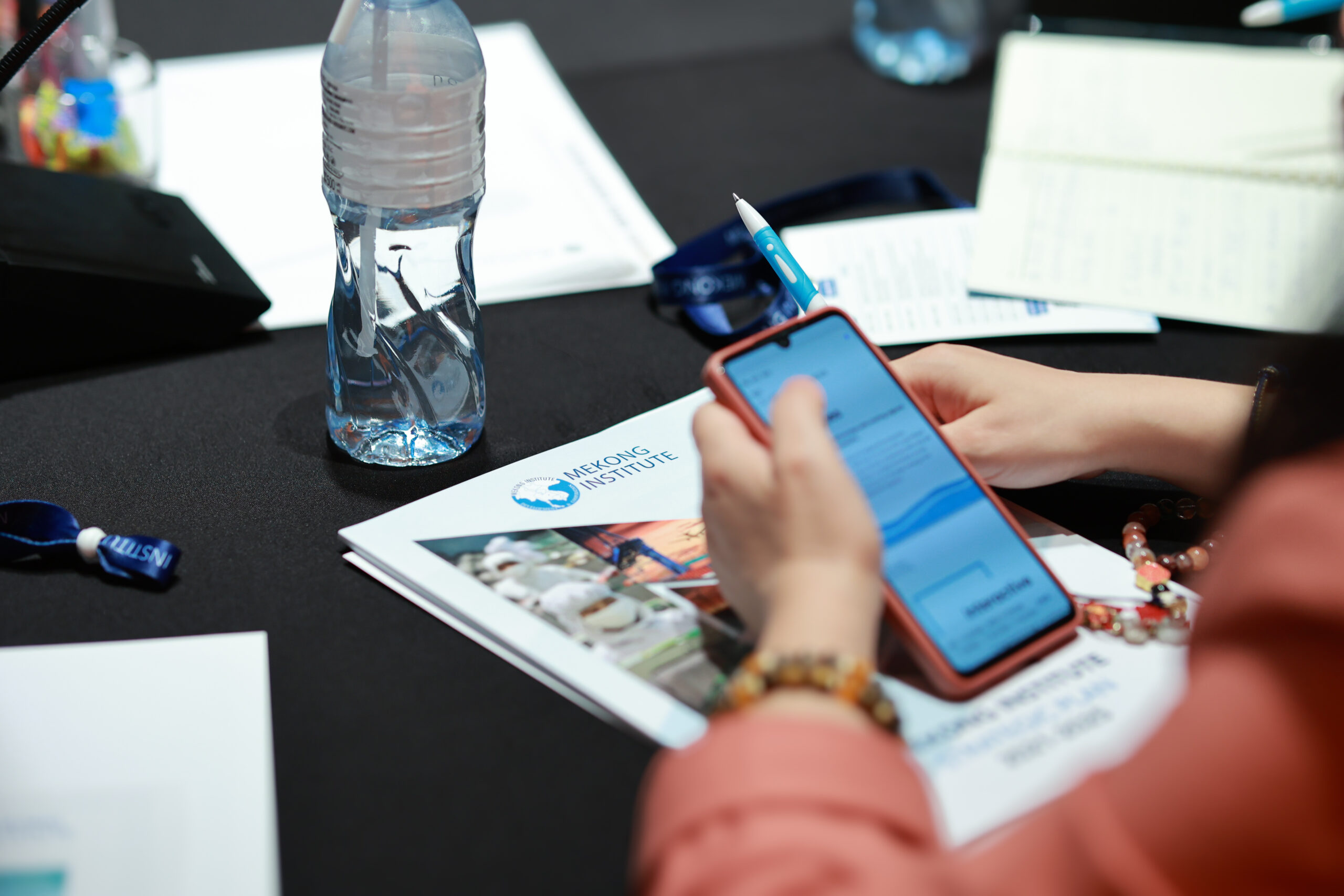

Luang Prabang, 18 December 2025 — The Mekong Institute (MI) contributed to advancing regional dialogue on energy transition and power innovation at the 2025 Second Lancang–Mekong Region International Electric Power Synergistic Innovation Seminar and Achievement Release Conference, held in Luang Prabang, Lao PDR.
Organized and hosted by CSG Yunnan Power Grid, the high-level conference, held under the theme “Driving Power Innovation and Cultivating Talent for a Connected, Clean, and Resilient Lancang–Mekong Energy Future,” brought together policymakers, power utilities, research institutions, universities, and technology providers from across the Lancang–Mekong region to exchange perspectives on innovation, regional connectivity, and sustainable energy development.
Delivering the keynote address, Mr. Suriyan Vichitlekarn, MI Executive Director, underscored that energy transition in the Lancang–Mekong region is not only a technological shift, but a systemic transformation requiring innovation, interoperable standards, skilled human capital, and strong multi-stakeholder collaboration. He emphasized that the transition must support energy security, affordability, and reliability, while contributing to inclusive growth and regional integration.
Mr. Suriyan reaffirmed MI’s mandate as an intergovernmental organization owned by the six Greater Mekong Subregion countries—Cambodia, China, Lao PDR, Myanmar, Thailand, and Viet Nam—to support capacity development and multi-stakeholder partnerships for regional cooperation and integration. He highlighted energy as one of MI’s priority thematic areas and noted MI’s close collaboration with regional power utilities, research institutes, and development partners to strengthen knowledge exchange and practical cooperation.
In his remarks, Mr. Suriyan outlined key priorities for regional energy cooperation, including promoting innovation beyond technology to encompass policy, finance, and business models; advancing common and interoperable standards to support cross-border connectivity and power trade; investing in talent development to ensure a just and sustainable transition; and deepening collaboration among governments, state-owned enterprises, the private sector, academia, and financial institutions. He reiterated MI’s readiness to serve as a neutral regional platform and connector to facilitate dialogue, partnerships, and joint initiatives across borders.
MI’s participation in the conference reflects its continued commitment to supporting the Lancang–Mekong Cooperation framework and contributing to a cleaner, smarter, and more resilient regional energy future through knowledge, capacity development, and partnership. The event concluded with the release of innovation achievements and cooperation initiatives, reinforcing shared efforts to advance high-quality and sustainable development in the Lancang–Mekong region.


