
In case you missed it, ministers representing all six countries of the Greater Mekong Subregion (GMS) have endorsed a new pipeline of regional development projects that are open for private investment. The GMS Regional Investment Framework (RIF) 2026–2028 was officially launched on November 28, 2025, at the 27th GMS Ministerial Conference (MC-27) in Bangkok, Thailand, reflecting the shared priorities and commitment of GMS governments to deepen subregional cooperation by mobilizing finance for actionable, high-impact investments.
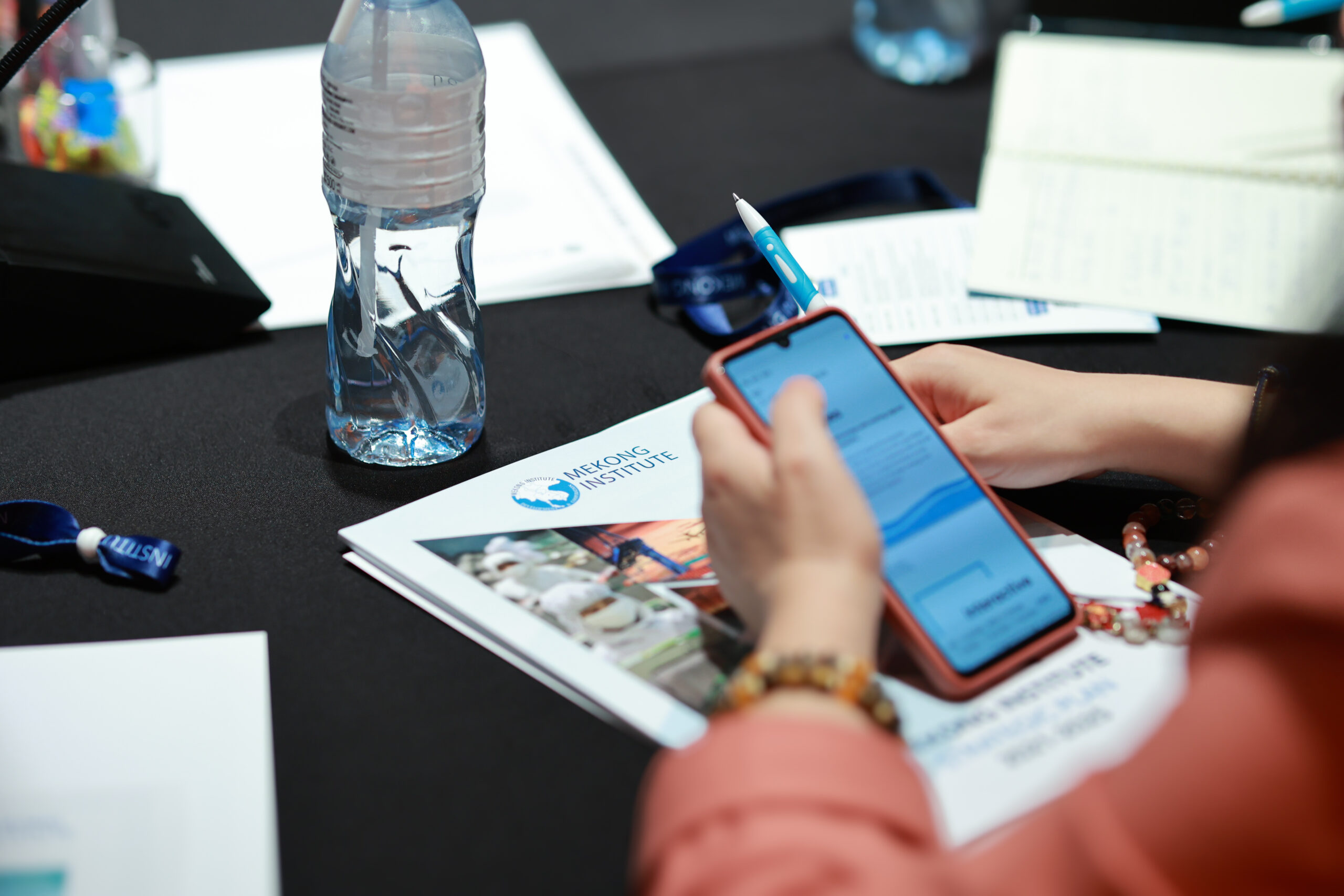
Ahead of the ministerial endorsement, the GMS Business Council and the Mekong Institute (MI) co-organized breakout sessions to engage private-sector representatives in refining future investment priorities. To support these discussions and promote the new investment pipeline, MI curated an interactive poster gallery and walkthrough of the RIF 2026–2028, showcasing USD 18.8 billion in bankable projects ready for financing, partnership, and implementation. Branded as “Invest in the GMS,” the gallery provided private companies with a clear, government-endorsed entry point into one of Asia’s fastest-growing economic corridors.
The RIF pipeline comprises 88 projects spanning transport, energy, environment, agriculture, trade, tourism, health, and urban development, underlining GMS governments’ commitment to accelerate sustainable development across the subregion. Transport remains the largest sector, accounting for USD 12.9 billion, or 69 percent, of all planned investments, while substantial allocations to environment and trade signal rising demand for green technologies, logistics solutions, and cross-border digital platforms.
For the private sector, the RIF offers a predictable, government-endorsed pipeline of investment-ready projects aligned with national strategies and regional priorities. It provides stability and clear entry points for companies across infrastructure, logistics, clean energy, agribusiness, climate solutions, and health services. Opportunities range from large-scale connectivity and transport projects to green technologies, sustainable supply chains, digital platforms, and urban development. Together, these investments support commercial returns while contributing to long-term regional growth.
MI’s poster gallery also highlighted the RIF’s interactive online database, which allows users to filter projects by sector, country, and investment type to quickly identify opportunities aligned with their growth strategies. The platform provides detailed project information, financing needs, expected results, and government focal points, offering a practical tool for turning interest into investment.
As a core implementation instrument of the GMS-2030 Strategy, the RIF translates shared development priorities into tangible projects that advance connectivity, climate resilience, and inclusive growth across the subregion. With a portion of financing still to be mobilized, private-sector collaboration remains essential, creating significant opportunities for investors seeking long-term regional impact alongside sustainable returns.
The RIF 2026–2028 was developed by GMS countries—Cambodia, Lao PDR, Myanmar, Thailand, Viet Nam, and the People’s Republic of China—with coordination and technical support from the Asian Development Bank (ADB) as GMS Secretariat. For more information, check out MI’s “Invest in the GMS” poster gallery here and scan the QR code to explore the RIF 2026–2028 database. To download the GMS RIF Main Report and the GMS RIF Annex, click here.
Related story: MI and GMS Business Council Strengthen Private Sector Engagement to Advance the GMS Regional Investment Framework at MC-27


