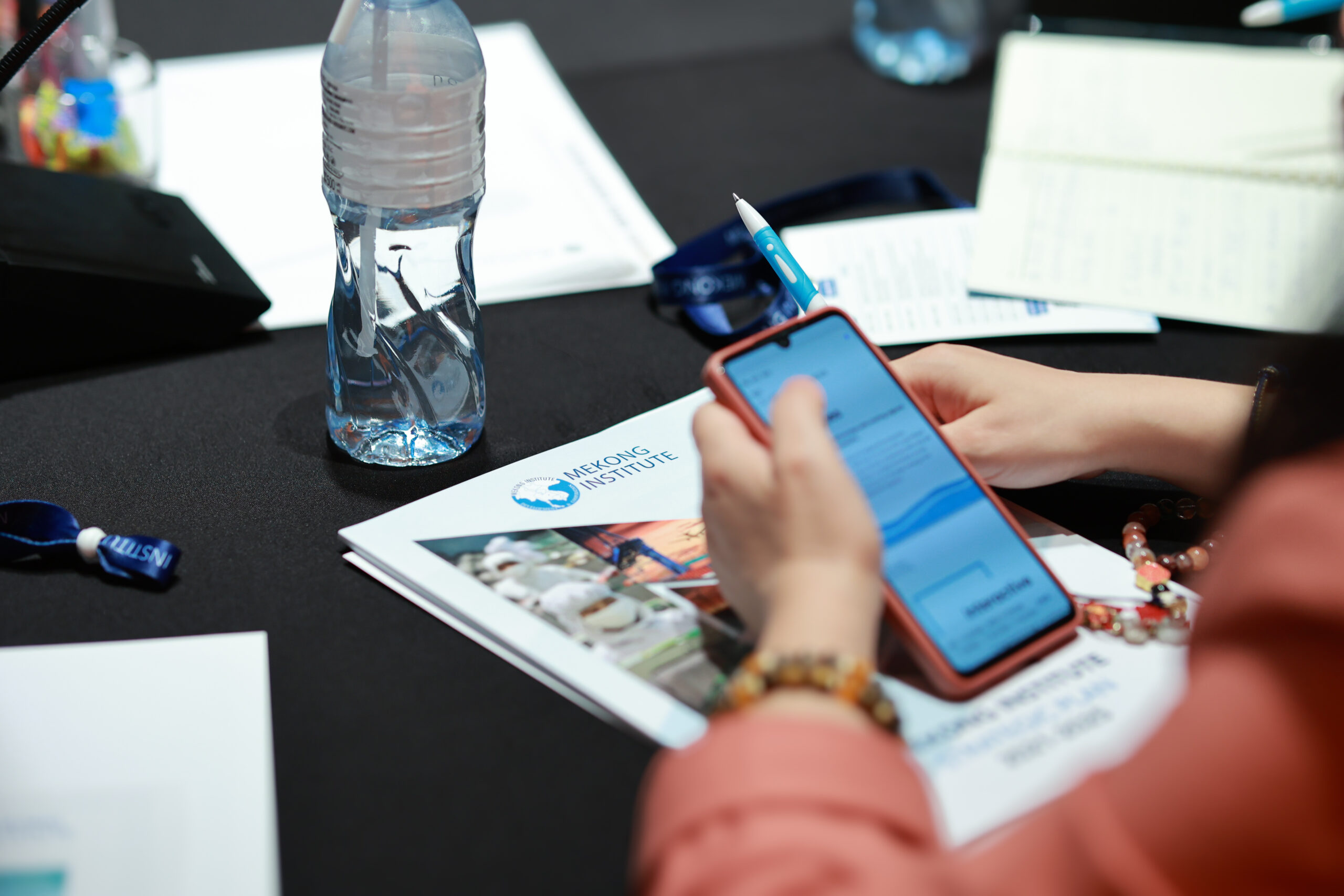

Khon Kaen, Thailand – February 28, 2025 – To ensure regional initiatives address regional issues and drive sustainable impact, Mekong Institute (MI), with support from the Mekong-Republic of Korea Cooperation Fund (MKCF), held a five-day “Regional Project Identification” training from February 24-28, 2025, in Khon Kaen, Thailand. The program convened 30 participants from government, academia, and non-governmental organizations across the five Mekong countries and the Republic of Korea (ROK).
The training enhanced participants’ capacity to identify, plan, and develop regional development projects aligned with MKCF’s seven priority sectors: (1) Culture and Tourism, (2) Human Resources Development, (3) Agriculture and Rural Development, (4) Infrastructure, (5) Information and Communication Technology (ICT), (6) Environment, and (7) Non-traditional Security Challenges. It focused on analyzing regional challenges, fostering cross-border collaboration, and formulating project concepts for sustainable growth. Additionally, it prepared potential project-implementing agencies to craft strong Expressions of Interest (EOIs) and advance full proposals for submission under the 9th MKCF Call for Proposals.
Mr. Madhurjya Kumar Dutta, Director of MKCF and MI’s Trade and Investment Facilitation Department, opened the training by emphasizing the need for strong partnerships to address common regional challenges. He encouraged participants to actively engage and develop innovative, viable, scalable, and sustainable project concepts, anticipating strong, solution-driven proposals to take shape.
Throughout the five-day training, participants explored key global and regional challenges in MKCF’s seven priority sectors, gaining relevant insights and tools to analyze development issues and craft effective solutions. The sessions offered a deep dive into strategic project design, covering problem identification, goal setting, and the application of the Theory of Change and logical frameworks.
Participants collaborated in cross-country, sector-specific groups to explore the vital role of stakeholder engagement and partnership throughout the project life cycle — from design and implementation to the post-project phase. They learned that well-developed stakeholder engagement plans and effective coordination mechanisms are essential for ensuring successful project execution, long-term impact, and sustainability. The training also provided hands-on experience in results-based monitoring and evaluation systems, risk management strategies, and sustainability planning, providing them with a solid framework for creating scalable, high-impact regional projects. By bridging knowledge with real-world applications, the training prepared the participants to tackle complex regional development challenges with the right strategies and tools.
The training concluded with participants developing 12 regional project concepts, which they shared in a mock project pitching session. The MI team and resource persons provided constructive feedback to help refine the project designs. This hands-on exercise allowed participants to apply what they had learned to real-world project development.
In a post-training evaluation, eighty-eight 88% of participants saw the need to refine their project EOIs for the 9th MKCF Call for Proposals this year. Ninety-two percent (92%) planned to conduct stakeholder consultations to identify development needs and explore potential partnerships for joint regional projects, either for the next MKCF Call for Proposals or other funding opportunities.
Ninety percent (90%) of participants expressed their intention to apply their newly acquired knowledge, including sharing insights and tools with colleagues and partners, establishing or enhancing Monitoring & Evaluation systems, exploring joint project opportunities with fellow participants, and developing cross-border cooperation plans to address regional challenges. All participants reflected that the hands-on application deepened their understanding of regional development issues and improved their ability to design impactful projects using effective tools. The organizing team will follow up on action plans throughout 2025, ensuring progress, providing support, and tracking outcome-level changes to measure the project impact.
The training is a part of the three-year project on “Capacity Building on Regional Project Design, Implementation, Monitoring & Evaluation of Mekong-Republic of Korea Cooperation Fund (PRIME)”. Launched in April 2023 and supported by the MKCF, this initiative provides support on enhancing capacities of the MKCF projects’ prospective proponents in the five Mekong countries and RoK.
In pursuit of advancing subregional cooperation, the RoK established the MKCF in 2013 following the Han River Declaration in 2011. By early 2025, the RoK had provided funding support to 61 projects, extending technical, financial, and administrative assistance to implementing agencies from Mekong countries, the RoK, and regional and international organizations. For more information on the MKCF, visit: www.mekongrok.org


