
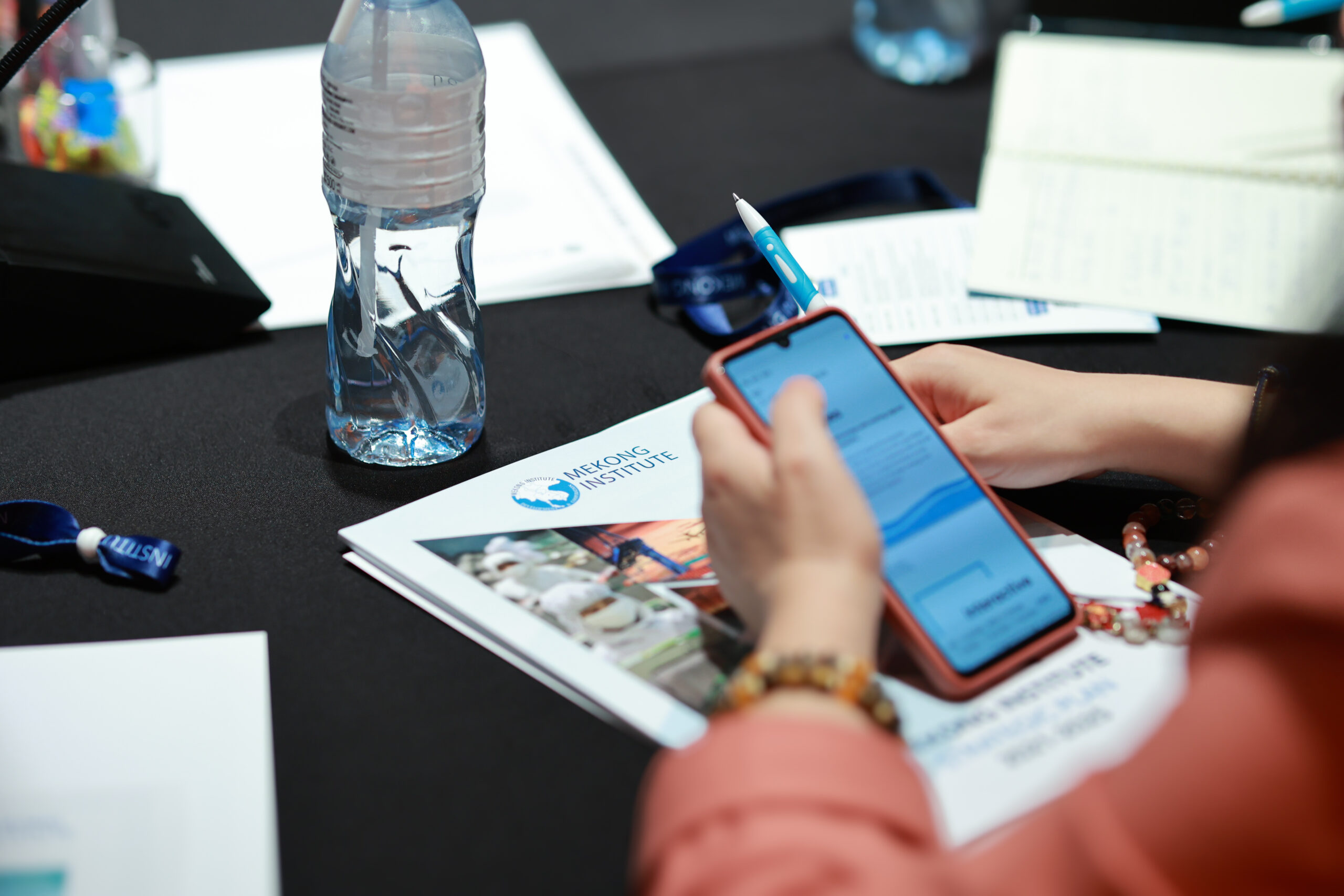

Phnom Penh, Cambodia, March 30, 2026 — The Mekong Institute (MI), in close collaboration with the Ministries of Health of the Kingdom of Cambodia and the Lao People’s Democratic Republic, convened the First Regional Expert Working Group (EWG) Meeting and the First Regional Project Steering Committee (PSC) Meeting for the Mekong Children’s Heart Care (MCHC) Project in Phnom Penh, Cambodia.
The meetings brought together representatives from the Ministries of Health of Cambodia and Lao PDR, MI, Fuwai Hospital of the Chinese Academy of Medical Sciences, the Ministry of Foreign Affairs of Lao PDR, the Ministry of Planning of Cambodia, and other relevant stakeholders. Representatives of the Embassy of the People’s Republic of China attended as observers.
Funded by the Government of the People’s Republic of China through the Global Development and South-South Cooperation Fund, the MCHC Project aims to strengthen regional cooperation and national capacities for the prevention, screening, diagnosis, and treatment of congenital heart disease (CHD) in Cambodia and Lao PDR.
During the Regional EWG Meeting, participants conducted a comprehensive technical review and validation of the Project’s design and implementation approach. The meeting examined the proposed Work Plan and Budget, clinical protocols, as well as capacity-building and operational arrangements. The EWG endorsed the overall implementation framework as technically sound, including the regional model for screening, referral, and treatment, alongside the capacity-building framework and operational modalities. It further agreed to submit its technical recommendations—together with the endorsed Work Plan and Budget—to the PSC for strategic consideration.
Building on these technical outcomes, the First Regional PSC Meeting provided strategic oversight and guidance. The PSC reviewed the recommendations of the EWG and approved the Project Work Plan and Budget, while endorsing the overall implementation arrangements, including governance, coordination, and reporting mechanisms.
The PSC emphasized the importance of expediting implementation, strengthening data management and reporting systems, enhancing patient identification, referral, and follow-up mechanisms, and ensuring the timely deployment of medical equipment and resources. It further underscored the need to adopt a comprehensive, full-cycle approach to patient care—from early screening and diagnosis to treatment and post-treatment follow-up—while accelerating progress towards agreed targets, scaling up interventions, and promoting sustainability through integration into national health systems and continued strengthening of regional cooperation.
At the regional level, the Project aims to screen approximately 50,000 children, provide treatment for at least 70 children, and train more than 235 healthcare professionals. In addition, five doctors will receive intensive training at Fuwai Hospital for a period of 6 to 12 months, contributing to long-term capacity development.
In support of service delivery and capacity strengthening, the Project will provide essential medical equipment, including the donation of one ultrasound machine to each participating country, as well as stethoscopes and occluders for frontline healthcare providers.
The Meetings reaffirmed the commitment of participating countries and partners to advancing cooperation in addressing CHD and to improving equitable access to quality healthcare services for children in the Mekong region.


