
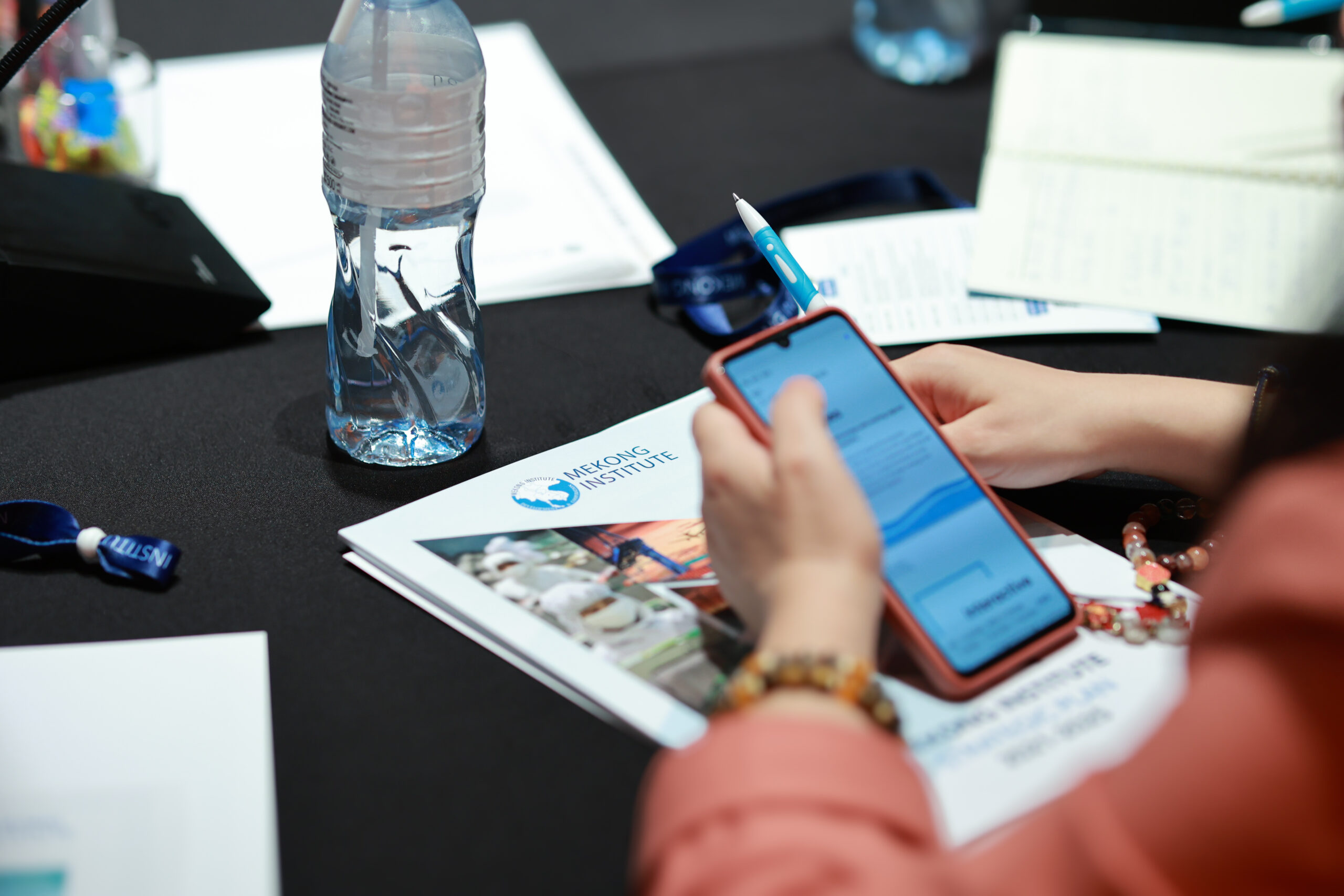

Lancang-Mekong (LM) countries are ramping up efforts to translate green energy development goals into actual practice amid ongoing geopolitical tensions and the growing global oil crisis. At the Regional Training on Green Energy Cooperation and Development in the LM Region held from March 22 to 31, 2026, in China’s Yunnan Province, 23 delegates from Cambodia, China, Lao PDR, Myanmar, Thailand, and Viet Nam enhanced their technical and policy expertise toward strengthening national and regional energy security.
“Energy security is a high-priority agenda of LM leaders. The current conflict in the Middle East has added complications to energy security in our region. Addressing these issues requires us to accelerate the diversification of energy sources… Regional cooperation in the joint development of power grids and transmission interconnections has become inevitable,” said Mr. Suriyan Vichitlekarn, Executive Director of the Mekong Institute (MI), as he set the context for the 10-day training program.
MI organized the training in collaboration with the Yunnan Academy of Science and Technology Development (YASTD), with support from the People’s Government of Yunnan Province, China. Participants included mid- to senior-level officials from LM countries’ energy ministries and related offices, as well as experts from academia and renewable energy (RE) practitioners.
The training was structured into three modules: Module I focused on policy frameworks and digital power grid readiness; Module II bridged theory and practice through technical applications and structured learning visits; and Module III equipped participants with the competencies to navigate green finance, ESG frameworks, and risk management to mobilize private sector investment.
Mr. Suriyan noted that the region has made significant progress toward the green transition but emphasized how the training seeks to address the urgent need for cross-border policy alignment and to tackle persistent technical constraints related to large-scale renewable integration. “As MI’s core mandate is to drive regional cooperation and integration (RCI), we believe that bridging the gap between high-level policy frameworks and the practical technical implementation required on the ground is key to a sustainable transition,” he added.
Learning from China’s ‘Green Energy Province’
The training, which coincided with the Lancang-Mekong Cooperation (LMC) Week 2026, featured sessions across three cities in Yunnan Province—Kunming, Yuxi, and Chuxiong. “Kunming and the wider Yunnan Province serve as an ideal living laboratory for this training. As a ‘Green Energy Province,’ where clean energy accounts for over 90% or more than 155 million kilowatts of total power generation, it offers a scalable roadmap for our member countries to overcome technical constraints in ultra-high voltage (UHV) transmission and grid stability,” explained Mr. Suriyan.
Yunnan Province is widely regarded as both a geographic and technical hub for regional energy cooperation. The Yunnan Power Grid has expanded its infrastructure to include 15 high-voltage cross-border transmission lines, enabling cumulative bilateral electricity trade with Viet Nam, Myanmar, and Lao PDR of nearly 80 billion kilowatt-hours—accounting for more than two-thirds of China’s total cross-border power transmission.
Given Yunnan’s expertise, participants undertook a series of learning visits to key energy facilities across the province. At the Yunnan Windey New Energy Co., Ltd. (Chuxiong Base), delegates observed the manufacturing of large-scale wind turbine systems, with a production capacity of 2 gigawatts per year. The program also included a tour of utility-scale solar integration projects, offering a practical blueprint for a province-wide transition to green energy.
Participants also explored the 100 megawatt / 400 megawatt-hour vanadium flow battery energy storage project in Lufeng, where they examined how long-duration storage technologies help stabilize the grid by storing electricity during periods of low demand and releasing it during peak hours. The visit highlighted key technical components, including electrolyte tanks and battery stacks, underscoring their high safety standards and long lifespan as critical enablers of variable renewable energy integration.
Meanwhile, a field visit to the Bajiao Village demonstration project in Tonghai, part of the Global Environment Facility–United Nations Development Programme (GEF-UNDP) “Zero-Carbon Villages” initiative, showcased an integrated RE system combining solar, wind, and biomass. Participants were introduced to the “solar photovoltaic + storage + direct use + flexible load (PEDF)” system and the electrification of households, demonstrating how decentralized energy solutions can help narrow green gaps in rural communities.
Despite Yunnan’s exemplary achievements and the LM region’s overall progress, persistent challenges remain, including gaps in innovative financing mechanisms needed to achieve shared regional targets for a sustainable energy mix. To drive energy security, a five-year Action Plan for LM Cooperation (2023–2027) prioritizes low-carbon development and the establishment of a knowledge hub for green infrastructure. This covers areas such as UHV transmission, RE integration, and zero-carbon rural development.
Strategic considerations and collaborations
In addition to the technical sessions, the training featured a panel discussion moderated by Mr. Suriyan, with representatives from state-owned enterprises, line ministries, and international organizations. The discussion focused on cross-border power connections and regional electricity trade, and on how these can make power systems more flexible and reliable by combining hydropower with other RE sources.
At the end of the program, participants worked in mixed-country groups for a collaborative synthesis to share observations and key takeaways from the learning visits. These discussions helped connect technical insights with broader policy considerations.
Participants also attended the launch of the LMC Week on March 26 in Kunming. One of the training participants, Ms. Nguyen Thi Nhu Van, a lecturer from Electric Power University in Viet Nam, spoke at a thematic discussion on China–Viet Nam cooperation in cross-border power trade. She shared her perspective on how close collaboration in grid infrastructure and electricity trade can support carbon reduction, create economic opportunities, and offer a practical model for sustainable development through cross-border connectivity.


