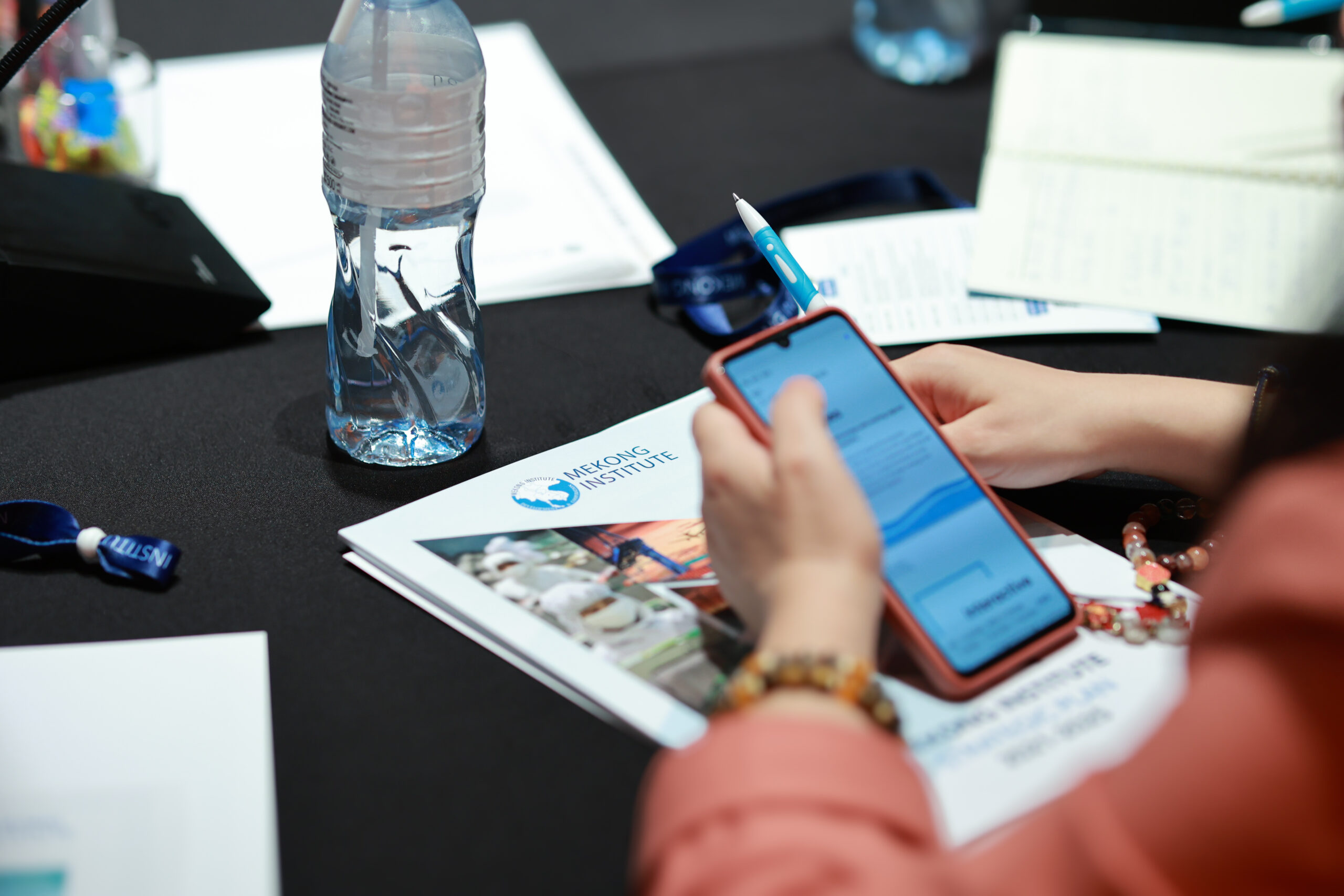

June 30 – July 4, 2025, Khon Kaen, Thailand — The Mekong Institute (MI) welcomed 22 dynamic participants from five of the Mekong region’s most iconic heritage cities—Siem Reap (Cambodia), Luang Prabang (Lao PDR), Bagan (Myanmar), Ayutthaya (Thailand), and Hue (Viet Nam)—to a five-day regional Training cum Workshop on Creative Content Creation and Digital Marketing to Promote Cultural and Creative Industries (CCIs). The workshop was held from June 30 to July 4, 2025, at MI Headquarters in Khon Kaen, Thailand.
Organized under the flagship project, “Promoting Creative Industry for Heritage Tourism Development in the Mekong Region (Creative4Mekong),” and funded by the Mekong–Republic of Korea Cooperation Fund (MKCF), the initiative aims to enhance the digital capacities of micro, small, and medium enterprises (MSMEs), artisans, and cultural practitioners working in the creative sectors of heritage tourism. By strengthening digital marketing and storytelling skills, the program contributes to the preservation and promotion of cultural assets in the digital economy.
In his opening remarks, Mr. Suriyan Vichitlekarn, MI Executive Director, emphasized the power of the creative economy as a vehicle for inclusive growth. “Cultural wisdom is deeply rooted in our communities. Digital literacy equips us with the tools to sustain and share this richness with the world,” he said. “By fusing tradition with technology, we create pathways for local economic development and regional cultural visibility.”
Throughout the five-day program, participants engaged in interactive modules on marketing and branding strategies, social media management, and digital storytelling. Facilitated by experts from across the region, the sessions focused on equipping participants with practical skills—from understanding audience behavior to crafting compelling digital content and managing online campaigns.
The training also included immersive site visits to the Isan Creative Festival, Thailand Creative Design Center (TCDC), and Baan Sa Wat Thi’s “Sin Sai Model”—offering participants real-world exposure to successful community-based creative enterprises and innovative design practices. These visits highlighted how traditional identity can be creatively integrated into modern tourism and market strategies, reinforcing the importance of public-private-community partnerships in sustaining CCIs.
Beyond knowledge sharing, the workshop fostered regional collaboration. As an intergovernmental organization, MI views such initiatives as vital platforms for cross-border learning and cooperation. Participants concluded the training by drafting tailored Digital Marketing Action Plans for their respective heritage clusters, with plans for further implementation through post-training coaching and small-scale financial support.
By building digital resilience among MSMEs and cultural entrepreneurs, MI and its partners are catalyzing new opportunities to amplify local voices and safeguard cultural heritage in a rapidly evolving digital landscape.


