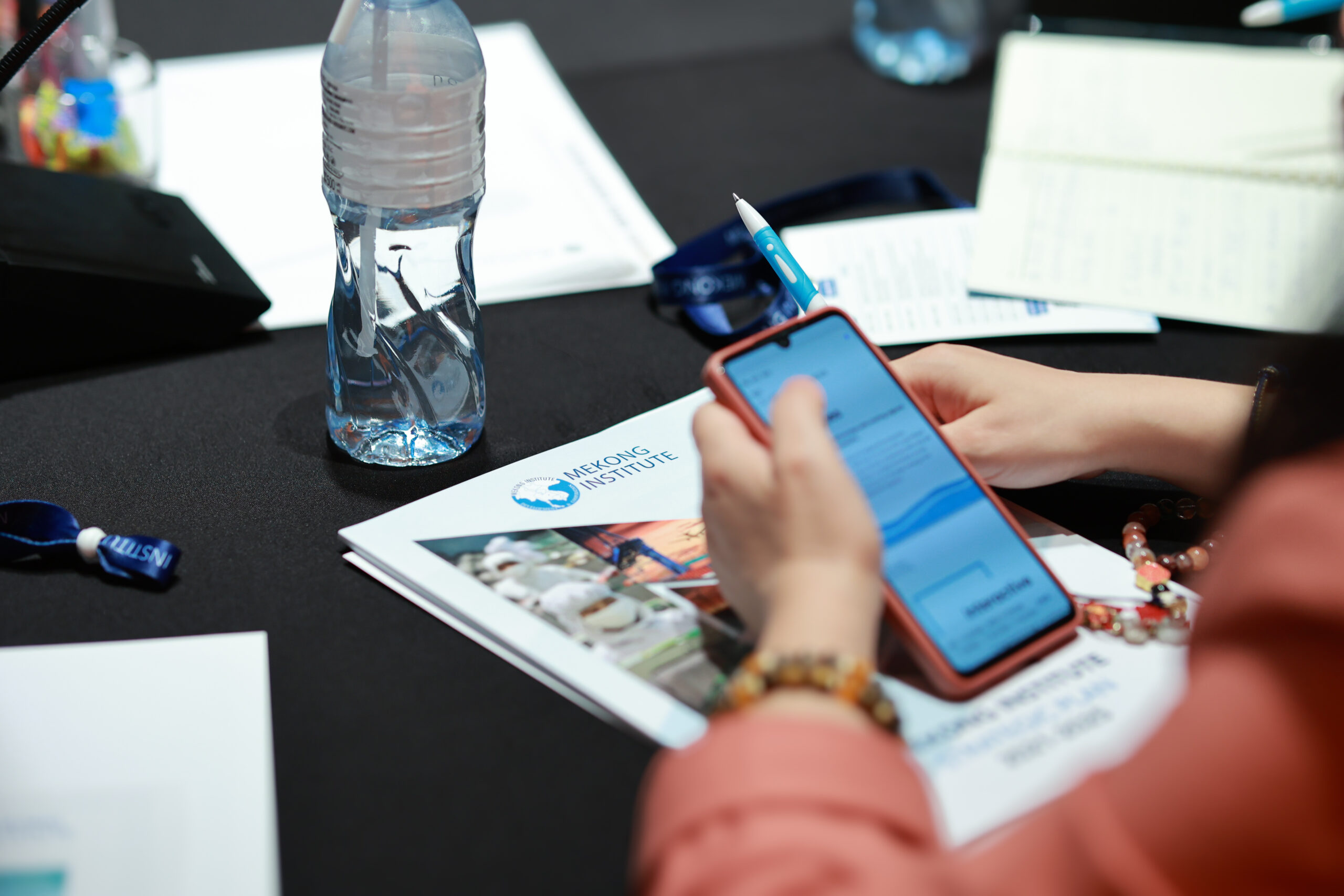

Khon Kaen, Thailand, 25 June 2026 — The Mekong–Republic of Korea (RoK) Cooperation is leveraging creative industry clusters to better showcase Mekong cultural identities and boost tourism competitiveness. At a four-day modular training program on creative industry cluster management, 24 representatives from five World Heritage Sites in the Mekong region learned practical skills to develop their cultural assets, foster innovation, and support the development of sustainable tourism.
The training, held under the Mekong Institute’s (MI) Creative4Mekong project and supported by the Mekong–RoK Cooperation Fund (MKCF), stressed that well-functioning creative industry clusters contribute to the enhancement of destination identity, attract authentic visitor experiences, and generate economic multipliers that make tourism destinations more competitive in the global market.
MI Director of Finance and Operations, Mr. Rithy Buth, graced both the program’s opening and closing sessions, where he noted that the training “is an investment in building a stronger network of practitioners, fostering regional cooperation, and promoting knowledge exchange that can drive innovation and sustainable development across the Mekong region.”
A creative industry cluster is a community or network of creative industries, including arts, crafts, design, cultural production, creative entrepreneurs, cultural venues, support organizations, and related infrastructure, located within the same area. By bringing these creative goods, services, and showcases together, clusters increase visibility and accessibility for tourists and other stakeholders. They are strategically coordinated to create distinctive tourism experiences, strengthen local identity, foster innovation, and generate economic opportunities.
Creative4Mekong Project Coordinator, Ms. Thongvone Sosamphan, recapped how the training enabled participants to explore the role of creative industry clusters in tourism development and destination competitiveness. “Interactive group activities encouraged the identification and mapping of creative assets and clusters, focusing on investable, practical, and scalable tourist destinations,” said Ms. Sosamphan. She added that discussions covered transforming these cultural and creative assets into engaging visitor experiences, using frameworks to assess infrastructure, skills, market readiness, governance coordination, and cross-border collaboration opportunities.
Participants integrated their findings into action plans aimed at enhancing tourism competitiveness and experiences at both national and regional levels. The action plans are expected to be implemented over three months with MI’s technical support, followed by a concluding online synthesis workshop scheduled for September 2026.
The Creative4Mekong project is a three-year initiative aimed at strengthening creative industries, preserving cultural heritage, and promoting tourism to support socio-economic development across the region. It works closely with stakeholders from Siem Reap (Cambodia), Luang Prabang (Lao PDR), Bagan (Myanmar), Ayutthaya (Thailand), and Hue (Viet Nam).
Media Contact
Ms. Thongvone Sosamphan
Project Coordinator, Regional Connectivity Division, Regional Connectivity and Value Chains Department, Mekong Institute
Email: [email protected]


