
Ho Chi Minh City, August 27, 2025 – Viet Nam has officially launched Phase 3 of the Triangular Cooperation Project on Sustainable Development in the Lower Mekong River Basin (P-LINK) under the Republic of Korea (RoK) – UN Office for South-South Cooperation (UNOSSC) Facility, together with its first pilot initiative: a solar-powered Reverse Osmosis desalination system on Con Linh Island, Tan Hao Commune, Vinh Long Province. The pilot addresses freshwater shortages caused by saltwater intrusion by converting brackish water into treated water for households and small-scale agriculture.
The two-day program gathered key implementers and stakeholders for an official ceremony in Ho Chi Minh City and a technical site visit to Con Linh Island, underscoring both the project’s Water-Energy-Food (WEF) Nexus solutions and partners’ commitment to long-term sustainability.
Funded by the RoK’s Ministry of Science and ICT (MSIT) and led by the UNOSSC, P-LINK brings together a consortium of partners, including the Mekong River Commission Secretariat (MRCS), Mekong Institute (MI), and the Science and Technology Policy Institute (STEPI).
Official Launch Ceremony in Ho Chi Minh City
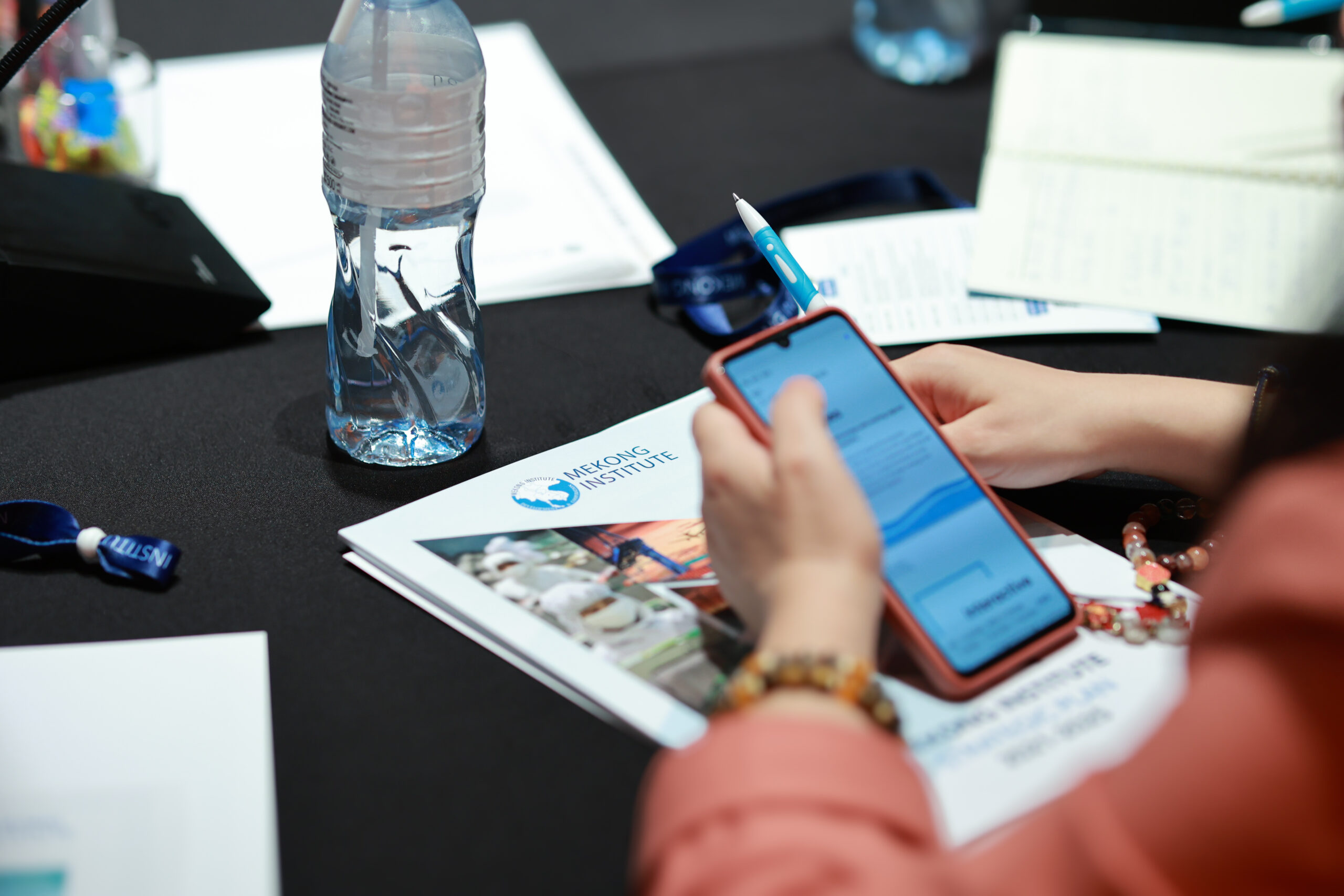
Held on August 27 at the Eastin Grand Hotel Saigon, the ceremony gathered representatives from UNOSSC, STEPI, MRCS, Viet Nam National Mekong Committee (VNMC), Vinh Long Provincial Government, Southern Institute of Water Resources Research (SIWRR), L2E Solution, and MI.
Discussions focused on Viet Nam’s urgent water security challenges, P-LINK’s integrated technical responses, and opportunities for scaling the WEF Nexus approach through policy alignment, local ownership, monitoring, and financing.
Technical Site Visit Highlights Key Needs
During the site visit, partners assessed infrastructure, confirmed installation sites, and consulted with local leaders and residents. A priority issue was the need for a transformer, as the community’s 22kV grid must be adapted to the 380V requirement of the desalination system. Noise management was also raised, with options such as soundproofing considered if installation occurs near the elementary school.
The site will also serve as a “living classroom.” MI will conduct a national training session in December 2025 to build community capacity and strengthen local ownership.
Collaborative Approach
Implementation relies on close cooperation between technical experts, local authorities, and regional stakeholders. L2E Solution, a private firm from the Republic of Korea, will install and maintain the system while training local staff. MI will lead community capacity-building. Oversight and coordination are provided by VNMC, Vinh Long authorities, MRCS, UNOSSC, and STEPI.
A WEF Nexus Solution
The pilot integrates surface water management, solar-powered desalination, and reuse of concentrated brine for shrimp farming. This holistic strategy delivers clean water, reduces waste and costs, and supports local livelihoods. Partners emphasized the pilot’s potential to scale across the Mekong region as a replicable model for climate-resilient water management. By combining advanced technology with multi-stakeholder collaboration, the Con Linh Island pilot demonstrates a sustainable, community-driven solution to climate-induced water scarcity.


